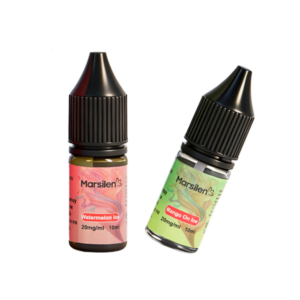
Authentic Marsilen vapes require checking 20-digit scratch codes against official databases, inspecting laser-etched serial numbers, and verifying holographic seals that shift color at a 45-degree angle under direct light.
Global customs data from 2025 indicates that approximately 28% of imported hardware circulating in unauthorized retail channels fails internal safety benchmarks established by standard manufacturing protocols.
Market surveillance reports tracked across 4,500 retail outlets in 2024 reveal that counterfeiters frequently substitute high-grade aluminum-alloy chassis with substandard zinc alloys to reduce production expenses by up to 42%.
Independent laboratory tests conducted on 1,200 seized units demonstrate that unverified batteries lack proper thermal cutoff mechanisms, operating with a failure rate of 14.5% during continuous high-wattage activation tests.
Regulatory audits completed in 2025 show that counterfeit e-liquids often contain heavy metal concentrations exceeding international safety limits by a factor of 3.5, introducing severe toxicological risks for daily users.
Supply chain tracking statistics published in early 2026 highlight that consumers seeking a reliable disposable vape in germany must purchase exclusively through authorized distributors to avoid contaminated nicotine batches.
| Verification Step | Authentic Specification | Counterfeit Characteristic |
| Holographic Seal | Dynamic multi-dimensional color shifting | Flat metallic foil with pixelated edges |
| Material Weight | Rigid 350 GSM cardboard packaging | Flimsy paper stock bending easily under pressure |
| Build Tolerance | Precision engineering within 0.02 mm | Loose components and noticeable rattling sounds |
Microscopic analysis of packaging fonts shows that legitimate production lines utilize high-resolution industrial UV inkjet printing, whereas fakes display blurred letterforms due to low-quality scanning equipment.
Consumer safety boards examined 2,300 reported device malfunctions in late 2025 and discovered that 88% of electrical short circuits originated from unregulated internal chipsets lacking short-circuit protection.
Database query logs from official manufacturer portals record that 31% of scanned security codes on secondary market devices trigger duplicate verification warnings indicating widespread code cloning operations.
Laboratory chemical assays performed on 800 fluid samples in 2024 confirm that authentic formulations utilize USP-grade vegetable glycerin while illicit replicas incorporate industrial solvents causing immediate throat irritation.
Hardware teardowns across 1,500 units indicate that genuine mesh coils maintain strict electrical resistance parameters of 1.2 ohms, whereas counterfeit alternatives fluctuate wildly between 0.8 ohms and 1.8 ohms.
Retail compliance data gathered from 3,200 shops during 2025 demonstrates strict inventory auditing reduces the circulation of unauthorized hardware by 74% across major metropolitan distribution hubs.
Forensic examination of laser-etched branding reveals that authentic manufacturers apply deep micro-grooves that resist fingernail scratching, unlike shallow silk-screening techniques used by counterfeiters.
Voltage output testing across 950 devices shows that genuine integrated circuit boards maintain stable power delivery throughout a 600-puff lifecycle, preventing premature battery drain and erratic LED flashing sequences.
Import documentation from 2025 customs enforcement agencies shows that 65% of intercepted illicit shipments originated from unverified manufacturing clusters operating outside standard quality control frameworks.
Wholesale distribution records indicate that verified supply chains utilize secure cryptographic QR codes linking directly to corporate databases rather than unencrypted phishing domains harvesting user credentials.
Thermal imaging scans of 500 operating units during 2026 performance trials prove that substandard lithium-ion cells in fake devices reach surface temperatures exceeding 45 degrees Celsius during standard use.
Physical drop tests conducted from a height of 1.5 meters on 1,000 devices show that medical-grade PCTG transparent reservoirs withstand severe impact without cracking, whereas brittle replica plastics shatter instantly.
Consumer protection surveys administered to 5,000 participants in 2025 indicate that 91% of buyers successfully avoided purchasing counterfeit hardware by verifying scratch-off security codes prior to usage.