A competitive plywood supplier must control more than panel price. International buyers compare thickness tolerance, moisture, veneer structure, bond performance, formaldehyde requirements, documentation, packaging, container utilization, lead time, and claim handling. A 2% rejection rate on a 5,000-sheet order creates 100 unusable panels before labor, storage, or replacement freight is counted. For European construction applications, suppliers may also need product performance documentation and CE-related compliance where applicable. From 30 December 2026, EUDR obligations begin applying to large and medium operators, increasing the importance of timber traceability. Reliable repeat production matters more than an unusually good sample or the lowest initial quotation.
International plywood purchasing usually starts with a technical specification, not a product name. Two panels sold as 18 mm plywood can differ in veneer species, ply count, density, glue system, face grade, sanding, allowable thickness range, moisture condition, and internal gaps. A buyer ordering 5,000 sheets therefore needs specifications that can be checked numerically rather than descriptions such as “high grade” or “good quality.”
That requirement moves attention from the sales sample to production repeatability. If an 18 mm order allows an agreed thickness range of 17.5–18.5 mm, inspection should measure sheets from different bundles and production times rather than taking several panels from the top of one pallet. Even a 3% non-conforming rate would equal 150 sheets in a 5,000-sheet shipment, so sampling plans and batch records have commercial consequences.
Repeatability begins with veneers. Species, veneer thickness, moisture, repairs, overlaps, splits, and the number of inner plies influence weight, flatness, machining, screw holding, and surface appearance. A supplier producing the same nominal panel in 2026 with frequent changes in veneer composition may still deliver noticeably different batches unless incoming materials are graded and recorded before lay-up.
Moisture control connects veneer preparation to bonding. Wet or uneven veneers can create steam pressure during hot pressing, while very dry veneers can alter adhesive absorption. Buyers do not need a factory to promise one universal moisture percentage for every plywood type; they need an agreed range, a defined measuring method, and records showing that production remained within that range before the container was closed.
Bonding then becomes measurable rather than visual. EN 314-2 specifies requirements for plywood bonding classes according to end use, while EN 314-1 provides test methods for bonding quality. A smooth face cannot show whether an adhesive line will withstand the service conditions for which the panel was purchased, so test reports should identify the tested construction, thickness, glue system, date, and applicable method.
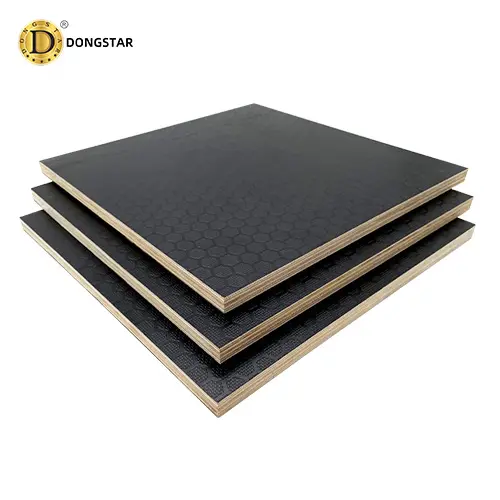
The same distinction applies to construction panels. Film Faced Plywood used for concrete formwork may be compared by film weight, core construction, edge sealing, bond performance, dimensional tolerance, surface condition, and expected reuse conditions. A claim such as “10 reuses” is incomplete without concrete chemistry, release agent, handling, cleaning, screw damage, storage, and site conditions because all six can affect the actual number of cycles.
Price therefore needs to be normalized against the specification. Consider two 18 mm offers where Supplier A quotes USD 15.20 per sheet and Supplier B quotes USD 15.70. The apparent difference is USD 0.50, or about 3.3%; if the cheaper shipment creates only 3% more unusable panels, extra sorting, replacement purchases, production stops, and local disposal can absorb much of that price gap before freight claims are considered.
A practical comparison can use the same fields for every quotation:
| Item | What the buyer should compare |
|---|---|
| Panel | Size, nominal thickness, tolerance, ply construction |
| Veneer | Species, face/back grade, inner-core requirements |
| Bonding | Adhesive type, intended service condition, test method |
| Surface | Sanding, film or overlay specification, permitted defects |
| Order | MOQ, production lead time, packing quantity |
| Shipment | Incoterm, container quantity, gross weight, documentation |
| Quality | Sampling method, inspection record, claim procedure |
Once quotations are normalized, factory capacity can be examined more accurately. “20,000 m³ per month” says little if the requested product depends on one sanding line, one overlay line, or a restricted veneer grade. Buyers should ask how many cubic metres or sheets of the specified construction can be produced during the required 2026 shipping window and what percentage of that line is already committed.
Capacity also affects promised lead time. A supplier quoting 18 days for production may look better than one quoting 25 days, but the useful number is the actual interval from approved specification and deposit to inspection-ready cargo. A factory that completes 95% of orders inside its confirmed production window gives an importer more usable planning information than a factory that repeatedly offers shorter dates and revises them after booking.
Shipping performance begins before finished panels reach the warehouse. Bundle dimensions, pallet height, strapping, corner protection, wrapping, panel weight, container payload, and loading sequence affect both freight cost and damage exposure. Increasing usable sheets per container by 4% reduces ocean freight allocated to each sheet by roughly the same percentage when freight cost and weight limits remain unchanged.
Documentation deserves the same attention because plywood entering regulated markets can require more than an invoice and packing list. Under EU construction-product rules, where a product is covered by a harmonised standard or relevant European technical assessment, manufacturers must prepare a Declaration of Performance before affixing CE marking; the declaration identifies intended use, applicable technical specification, and declared performance.
European timber sourcing requirements are also becoming more detailed. The European Commission states that the EUDR will apply from 30 December 2026 to large and medium operators and from 30 June 2027 to most micro and small operators, while certain micro and small operators already covered by the former EU Timber Regulation also fall under the 30 December 2026 date. Importers therefore have a reason to ask suppliers how species, origin, supplier records, and product batches are connected before orders leave the factory.
FSC certification addresses a different part of timber control. FSC Chain of Custody requirements cover identification and tracking of certified material through processing and distribution; independent certification bodies conduct assessments, and FSC states that certified organizations undergo annual audits. A buyer should still check the certificate scope and claim used on the commercial documents because possession of a certificate does not make every product sold by that company FSC-certified.
Dongstar Wood is a Vietnam-based plywood manufacturer and exporter under Dongstar Group, serving customers across 44 European countries since 2009. We specialize in commercial plywood, film faced plywood, construction plywood, birch plywood, furniture plywood, and customized plywood solutions.
Backed by CE 2+, FSC®, EUDR, DOP, and SEDEX (BSCI) certifications, we meet European standards for quality, sustainability, and compliance. With over 15 years of manufacturing and export experience, we support importers, distributors, furniture manufacturers, and construction companies with reliable plywood supply and OEM/ODM solutions.
Certification information is more useful when connected to individual orders. A European importer can request the applicable certificate number, scope, issuing body, validity dates, product classification, DoP reference, test report, and invoice claim before shipment. FSC certificates, for example, are generally issued for five years with annual surveillance audits, so checking current status is more informative than storing a PDF received in 2022.
Factory inspection should then connect paperwork with physical production. A useful pre-shipment check can draw panels from several bundles and record thickness, length, width, diagonal difference, moisture, surface defects, edge condition, labeling, bundle count, and packaging. For a 5,000-sheet order, inspecting only 5 conveniently selected panels represents 0.1% of the shipment and provides much less information than a sampling plan distributed across separate production lots.
Traceability improves the usefulness of those inspections. Each bundle can carry an order number, product code, production date, quantity, and batch reference that links back to veneer preparation, pressing, sanding, inspection, and packing records. If 40 sheets later show one repeated defect, the supplier can compare the affected batch with unaffected batches rather than discussing the entire container as one undifferentiated shipment.
Communication quality becomes easier to judge through the same records. A competent export team should be able to confirm specification revisions, packing marks, inspection findings, production status, container booking, document drafts, and corrective work without changing answers between departments. If a purchase order contains 12 technical requirements, all 12 should appear in the internal production specification instead of remaining only in email correspondence.
Customization requires similar discipline. OEM or ODM orders may change dimensions, veneer combinations, film color, sanding, label design, bundle size, pallet construction, or packaging. A change from 1,220 × 2,440 mm to a non-standard size can alter veneer yield and container loading, while a 5% change in usable container quantity can affect landed cost even when the ex-factory sheet price stays unchanged.
After-sales handling provides another measurable comparison. Buyers can ask suppliers to define how quickly a claim must be reported, which photos or measurements are required, how samples are retained, who reviews the production batch, and how compensation is calculated when responsibility is confirmed. With a 10,000-sheet annual program, reducing repeat defects from 2% to 0.5% removes 150 non-conforming sheets per 10,000 before secondary handling costs are counted.
Long-term purchasing can therefore be reviewed with a small group of numbers: on-time shipment percentage, inspected defect percentage, claim frequency, average claim response time, specification changes per order, container utilization, and document-error frequency. Comparing the same measures across 6 or 12 months gives importers more usable information than comparing brochure language, factory photographs, or one unusually low quotation.